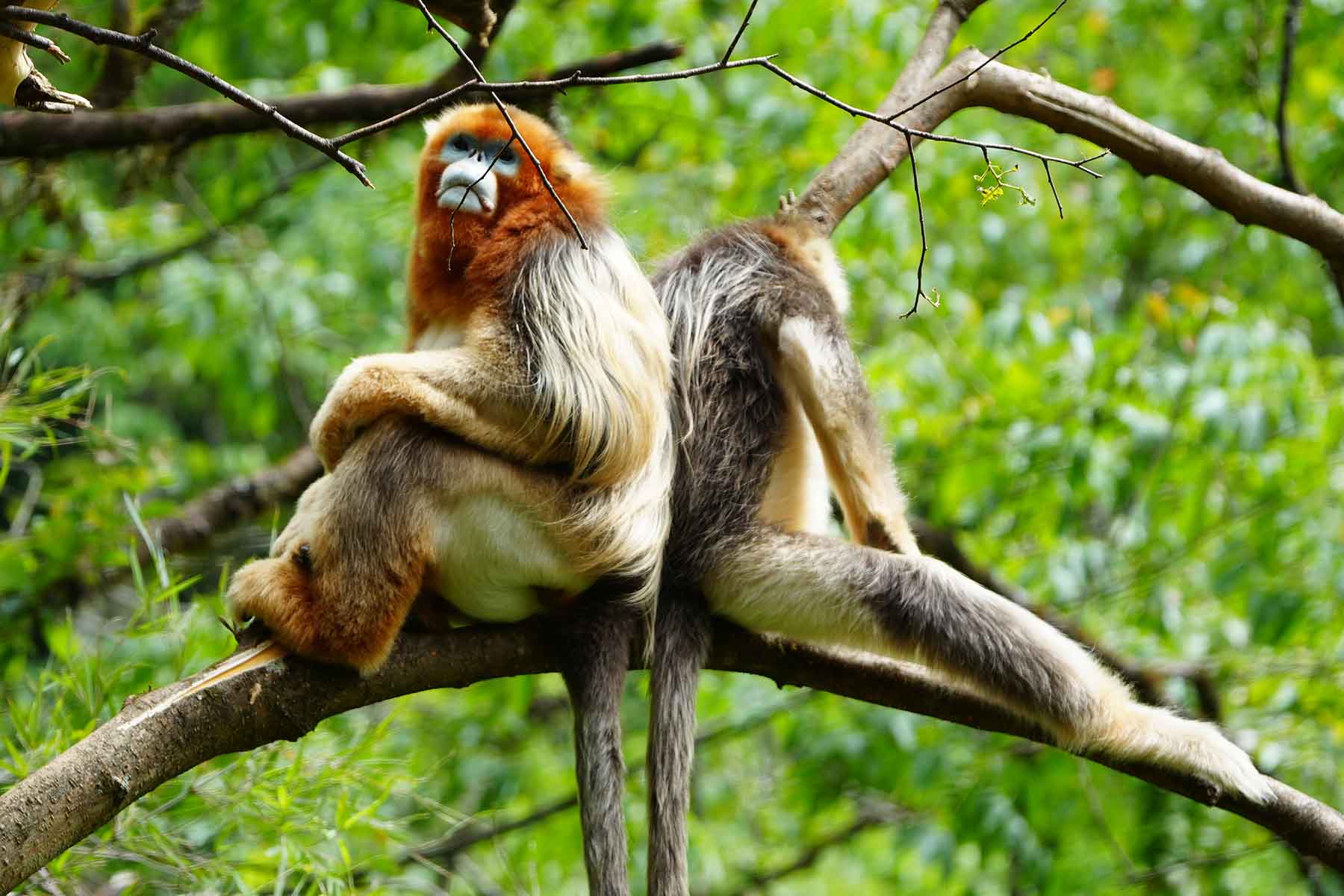
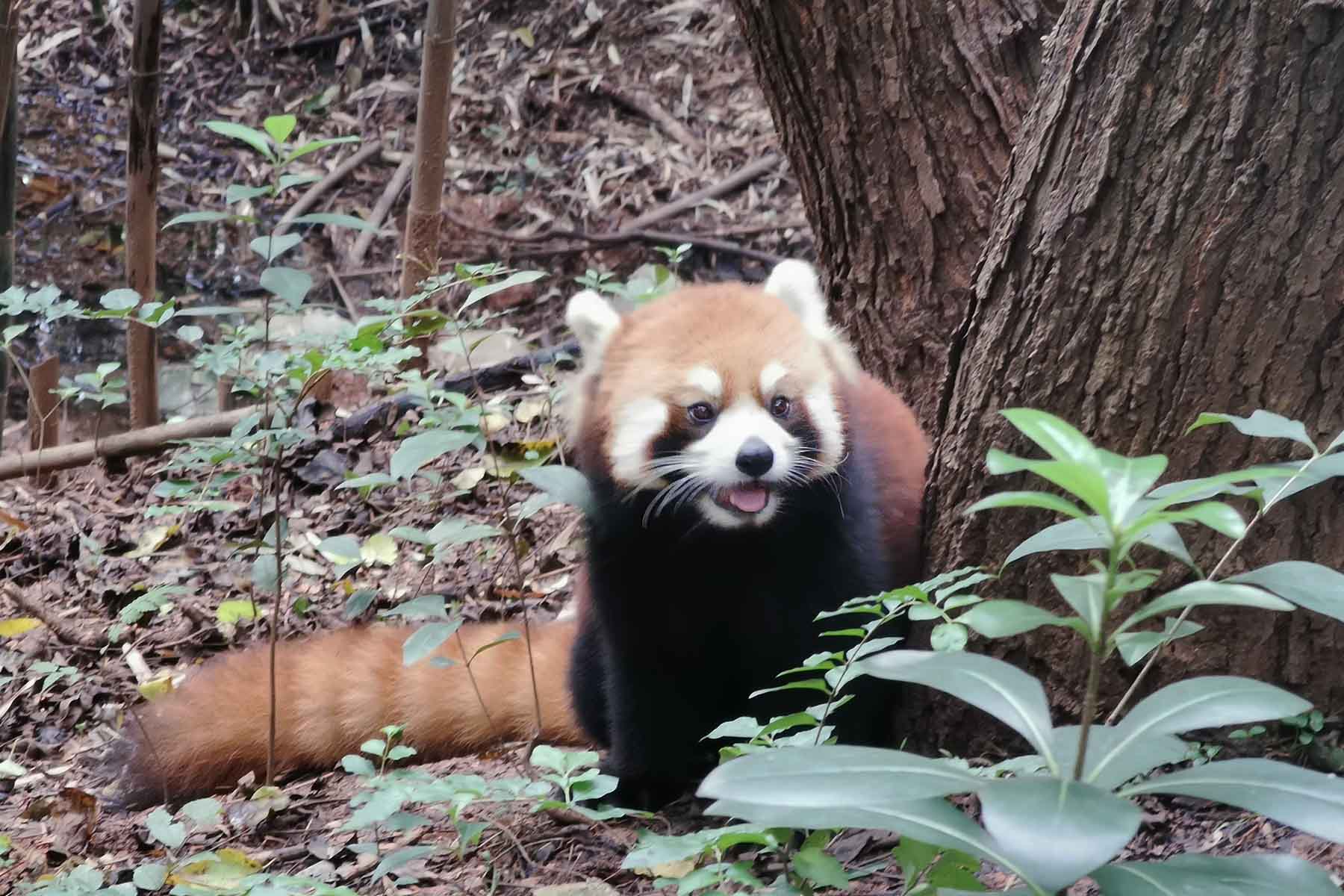
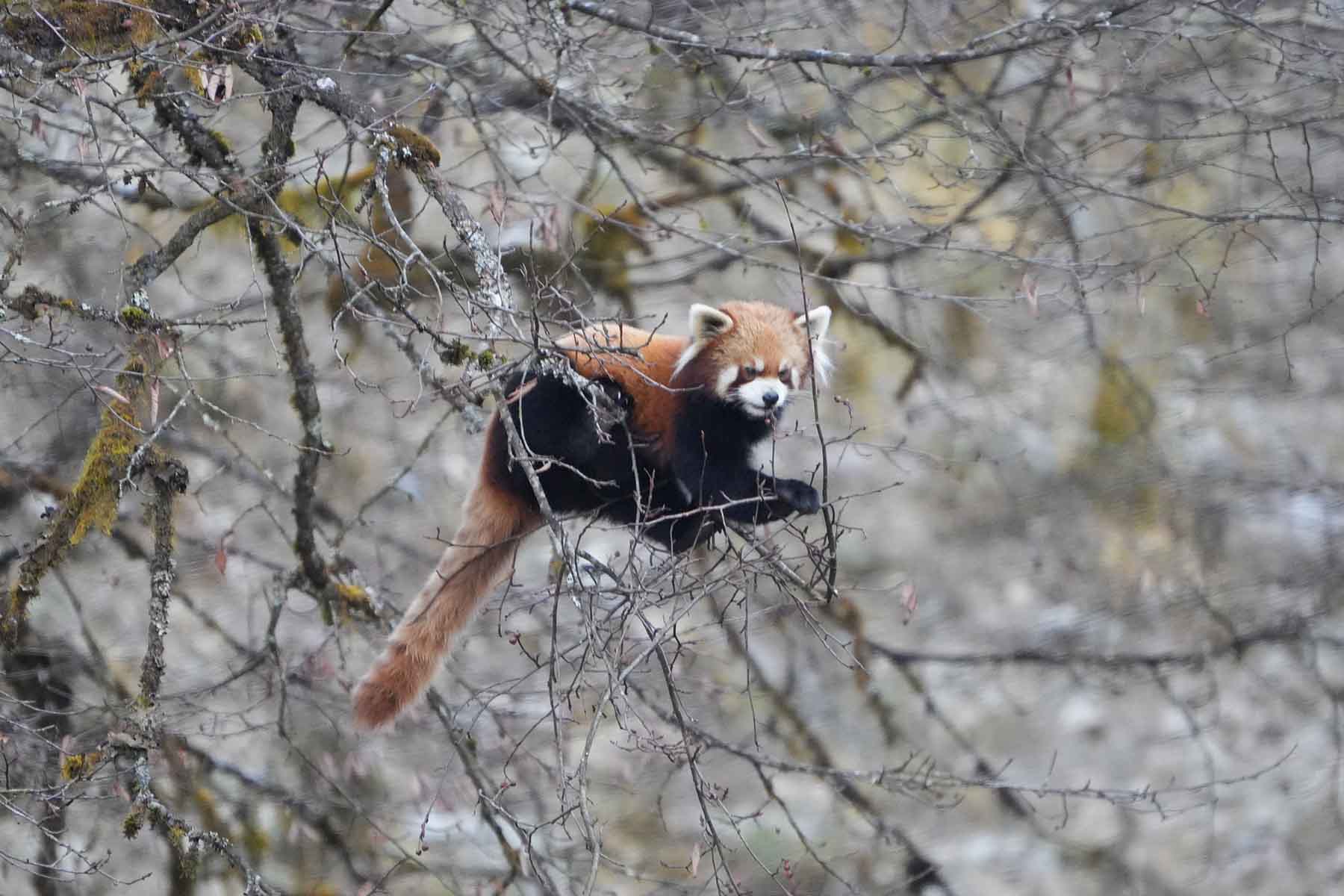
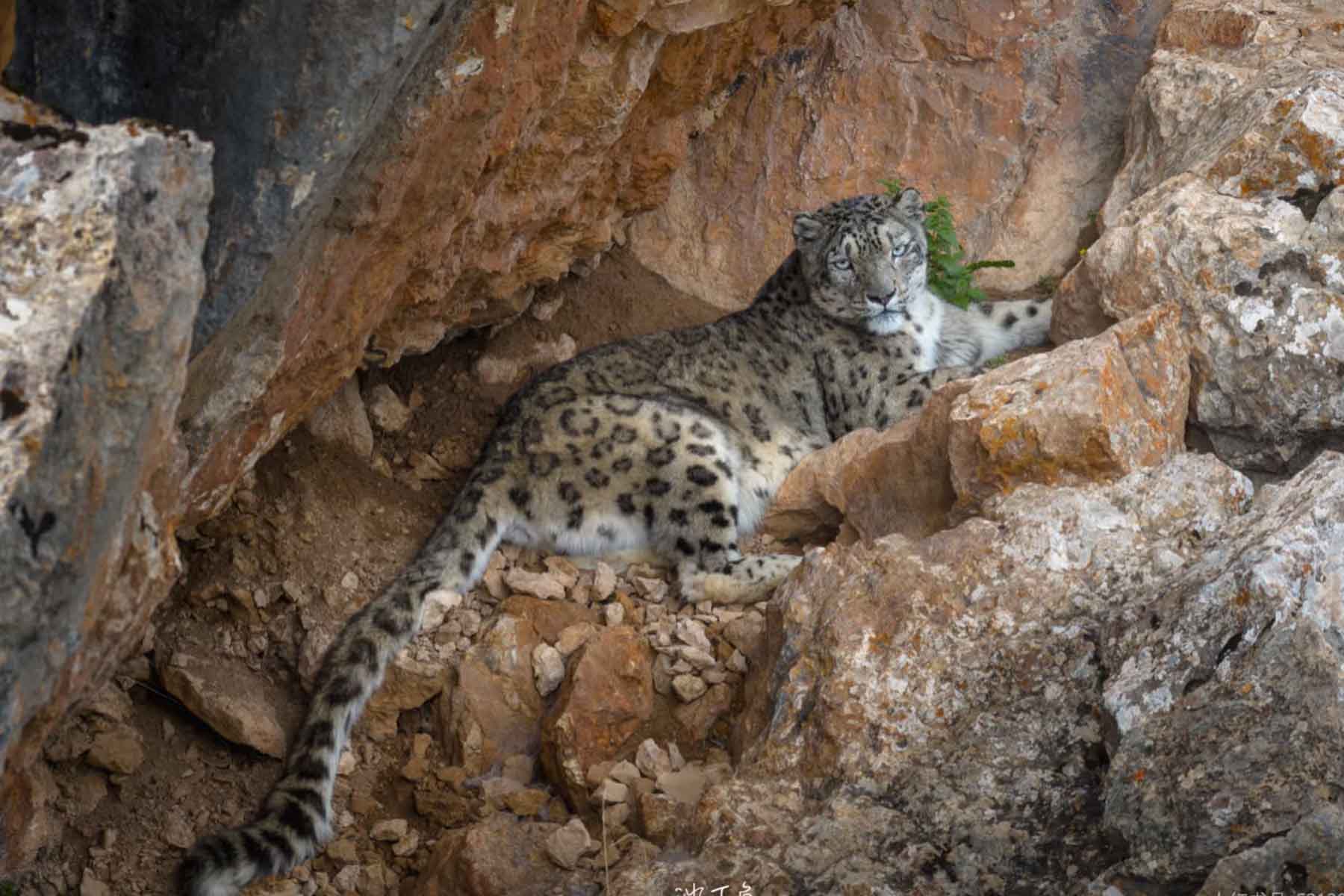
Tangjiahe Nature Reserve is a protected area of nature located by the northeast of Minshan Range in Guangyuan of Sichuan Province, bordering Gansu by its north and Sha'anxi Province by its east. Tangjiehe Nature Reserve and its sorrounding area is home to wildlife including Giant Pandas, Golden Snub-nosed Monkeys, Sichuan Takins, Leopard Cat, Revee's Muntjac, Chinese Goral, Asiastic Black Bear, etc. Tangjiahe is home to as many as 430 different vertebrate, 2400 different plants. It is one of the best places in China to watch wildlife.
 Tangjiahe Nature Reserve
Tangjiahe Nature Reserve is located in Qingchuan County of Guangyuan in northern Sichuan Province. It borders by its north to Gansu Province by Wenxian County of Longnan. It borders by its west to Pingwu County of Mianyang, of which it forms together a big part of the giant panda nature reserve in China by the east foot hill of Minshan Range between Sichuan Basin and Tibetan Plateau.
Tangjiahe is 300km north to the city of Chengdu that by driving it takes 3-4 hours to reach. From the nearest city Guangyuan from its fast train station to get to Tangjiahe by driving it takes 2 hours. The road into Tangjiahe was once troubled by frequenet landslide but now with the new expressway connects directly to Qingxi Town that saves not only time by driving but also makes it safer to drive. There is also fast train that goes to Qingchuan or Guangyuan from Chengdu or from Xi'an and from Qingchuan/Guangyuan Railway station one can use local car to get to Tangjiahe.
 Tangjiahe in Summer
The best seasons to watch wildlife in Tangjiahe is from November to the next March because most of the animals will be looking for food at lower part of the mountains that are closer to the roads and the mountains will be less leafy and provides better visibility. The mating season is from April to May for most mammals in Tangjiahe. Snow season is usually in February and March, which are also good seasons for wildlife watching. September and October is the berry seasons when some berry-eating animals will be active too but mountains are still leafy.
Most international travelers and many of the domestic visitors to Tangjiahe are aming to see wild animals here. The usual wild animal watching season is from late autumn to early spring each year when the cold temperature and snow drive down the animals to look for food at lower altitude near the river valleys. In general the highest chance to see wild panda in Tangjiahe is from December to April. Higher chance to see golden snub-nose monkeys are in November to the next March. Takins are easier to see from August to the next May. To watch birds the best season is from May to June although other seasons are also good.
The busy travel season in Tangjiahe is the main holidays including 1st week of May, 1st week of October, July and August, and the “golden foliage” season. You are recommended to avoid these seasons if you are keen to avoid the crowds. Although most of the tourists only visit during the day from 9am to 4-5pm and normally don’t affect your early morning and late afternoon watch of animals.
July and August is the summer school vacation that many families tend to travel to places such as Tangjiahe and will usually see crowds of people. The later into summer/August the less visitors you’ll see in Tangjiahe. From June to August(sometimes til September) is also the raining season of Tangjaihe when sometimes we see consecutive days of raining in Tangjiahe that may make animal watching hard. If possible, please avoid this season. In every late October/early November it is the "golden foliage" season in Tangjiahe that it will attract visitors here to see the yellow and red tree leaves of forest in Tangjiahe and by then the park will see more.
In general we recommend you to travel to Tangjiahe in winter spring time from December to March/April to have higher chance of seeing more animals. Please send your inquiries to us if you are keen on seeing one specific animal, we will suggest the best season and location in Tangjiahe. Morning and evening are the best time of a day to watch wild animals in Tangjiahe.
This include primates of Golden Snub-nosed Monkeys, Tibetan Macaques, and ungulates including Sichuan Takins, Reeve’s Muntjac, Chinese Goral, Wild Boar, Chinese Tufted Deer, as well as Carnivores such as Giant Panda (Rare), Asiastic Black Bear (Moon Bear), Yellow-Throated Marten, Hog-nosed Badger, Masked Palm Civet, Leopard Cat and other rodents and lagomorphs. See a full list of Tangjiahe Mammals with detailed information such as recommended seasons, best locations of searching/spotting of each mammal.
The number of giant pandas in Tangjiahe is estimated to be around 30+ in total. Giant pandas mainly live by the elevation between 2200m and 3200m forest where arrow bamboos grow. Most of the panda active places in Tangjiahe are without car access and are at higher elevation places in Tangjiahe deep mountains. Please be aware the chance of seeing a giant panda in Tangjiahe is extremely low in every season.
 Wild Panda in Tangjiahe Nature Reserve
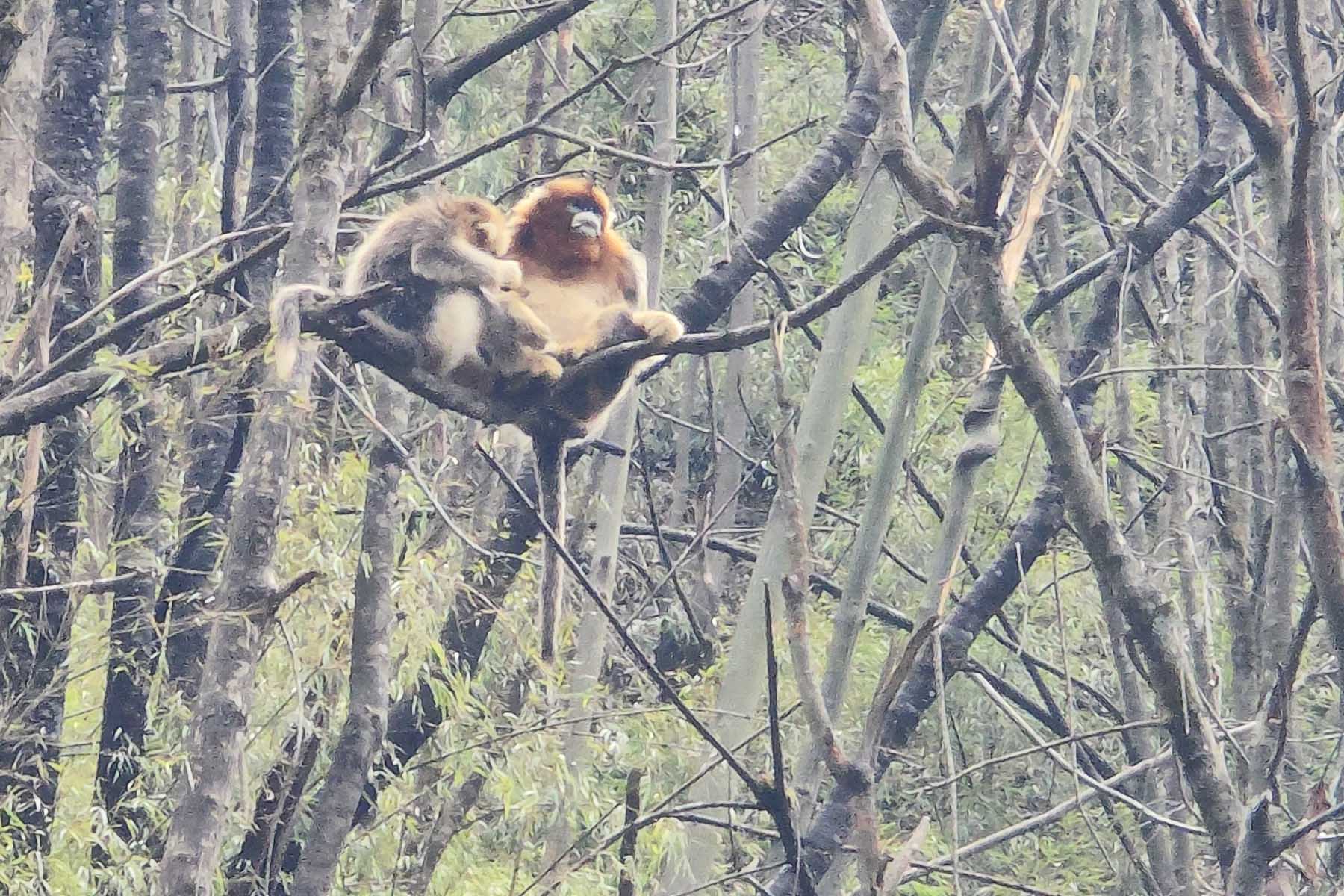
The number of golden snub-nosed monkesy in Tangjiahe is estimated to be around 1200 in total and growing. These monkeys mainly live by the elevation between 1200m and 3500m in forest. They can be as low as where the roads are. During summer time they stay higher by above 2500m and during winter they move down to around 1500m or lower for food. There are at present 6-7 major golden sunb-nose monkey groups in Tangjiahe, each group has around 100-150 monkeys. The best seasons to see golden monkeys are from November to the next March. If you come by the right season your chance of seeing golden snub-nosed monkeys is as high as over 65%.
 Golden Snub-nose Monkeys
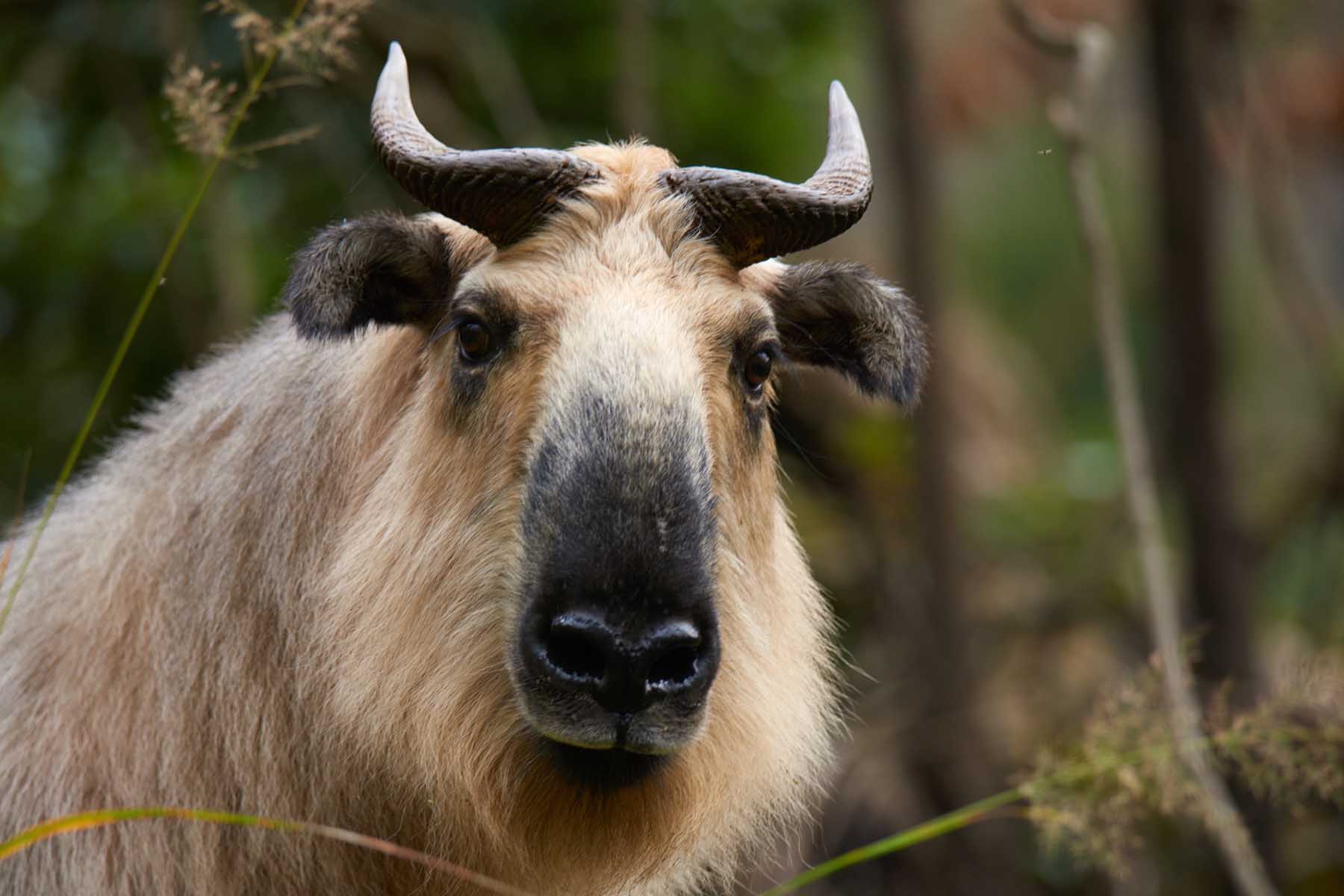
The number of golden snub-nose monkesy in Tangjiahe is estimated to be around 1000+ in total. Sichuan Takins are unique species in Hengduan Mountain Range. They live in forest, open highland grassland and bushes. They migrate in different seasons and have a large area to wonder. Takins normally live by the elevation between 2000m and 3400m in forest in either small herds of 3-5 or in big herds of 10-45. In winter they form bigger herds as many as 130 together.
Macaques are one of the easiest animal to see in Tangjiahe as they often search food from humans. Macaques live by elevation between 1400m and 3600m in Tangjiahe. They often feed on leaves, berries, insects, birds and bird eggs, human kitchen wastes.
Asiastic Black Bear is one of the carnivares in Tangjiahe. They live by the elevation between 1400m and 3600m and feed on nuts, fruits and sometimes steal honey from local farmers.
Golden Cat is a medium-sized feline animal with a body length of 90 centimeters, a tail length of 50 centimeters, and a weight ranging from 12 to 20 kilograms. The quantity is unknown. It is estimated to be around 40-60 but rarely seen in Tangjiahe.
Yellow Throated Marten inhabits in various forest types at an altitude of 1400-3100 meters and nests in tree or stone caves. The are active in morning and evening, eat rodents, as well as small animals, and even hunting medium-sized ungulates such as deer, muntjacs, and musk deers.
Chinese Serow inhabits mountainous areas with dense forests and sometimes bare rocks at an altitude of 1400-3800m. They are active in the morning and evening, and during daytime resting under high mountain overhanging rocks or in caves. Serows are solitude animals. They feed on weeds and the branches and leaves of woody plants, as well as a small amount of fruits. Chinese Serows are called "mountain donkey" due to their relatively large size.
Reeves' Muntjac inhabits environments such as forest and grass below an altitude of 2300m. There are many of these ungulates in Tangjiahe.
 Macaque
 Chinese Goral
The other wild animals also include hog badger, masked civet, cloud leopard, etc. See the full list of Tangjaihe Mammals .
Tangjiahe is also a good place to watch birds. Birds in Tangjiahe include Chinese Monal, Blood pheasant, tragopan temminckii, koklass pheasant, golden pheasant, laughing thruses, tits, magpies, minivets, etc. Some may involve searching by higher altitude.
Depending on your objectives, you can plan a trip in Tangjiahe as how long as you want. Normally we suggest you to have at least 2 full days time inside the reserve to have sufficient time for searching animals. If you are keen to find any specific animal then may need to plan for longer time (3-5 full days for golden snub-nose monkeys in the right season) because despite Tangjiahe being one of the best places to watch wild animals in China it will still take time to search for them at the best locations given the uncertainty of wild animal habits, dense forest, large territory of certain species.
The suggested time of searching is from 6am to 10am, and from 4pm to 7pm, night search from 9.30pm to 11pm.
Winter (November to the next march) is what we recommend being the best seasons for most wildlife(including Golden Snub-nose Monkeys). April-May is mating season for many animals but then the forest will become more leafy and dense. From August is good for Sichuan Takin. Asian Black Bear is good in March/April the waking season, and September/October for the nut/berry seasons. Please send your inquiry to us if you are keen for any specific animal and not sure the best seasons to come.
 Map of Tangjiahe Nature Reserve
The usual spots to watch for wildlife in Tangjiahe is to follow the road from hotel down along the river to the Nature Education Center. The small open grassland between forests on both sides of river are good spots for Sichuan Takins (by night especially). The road is what normally we use the most to drive down, walk down along the river to search for animals. By night it’s better to drive down the road and do the searching. Most mammals are seen from this road. The bushes near the roads are usual places for Reeve’s Muntjac. The bigger trees along the river look higher in the trees and may see Asian Black Bear(low chance), Golden Snub-nose Monkeys(winter). On the ground look for Chinese Gorals, Forest Musk Deer (rare), Yellow-throated Marten. By the river look for By night search for Leopard Cat (low chance), Masked Palm Civet, Hog-nosed Badger, Chinese Ferret Badger.
Xiangfei Trail is near the hotel and good for early morning and late evening search (not recommended by night search).
There are several open grasslands near Baixiong Pass that we recommend travelers to walk this part with chance to see Sichuan Takins, Reeve’s Muntjac, black bears(low chance), Chinese Goral. The side valley west to Baixiong Pass one can walk up on the small trail and with chance to wildlife.
It is located 1.5km lower by Baixiong Pass and good places for day watch and night watch (badgers and civet, hedge hog.)
Motianling is a big place and involves walking on stairs (4km to the top). Follow the river down by end terminal of the road one will have chance to see the species listed above. Follow the river up is restricted by sometimes unguarded and one can walk up(no driving is possible).
The best locations to see golden snub-nose monkeys is at multiple locations in the valley in the right season(winter).
The best locations to see wild pandas in Tangjiahe is beyond Shuichiping in the restricted area that visitors are not allowed to go in. Another place that wild pandas have been spotted is at Motianling by the higher part of the trail during mating season from April to May. You may have a chance of seeing pandas resting on trees there but the chance is very low and may require huge patience. This is the only place that one can walk to within an hour in Tangjiahe.
The best locations to see golden snub-nose monkeys is Shuichiping and around in the west valley. However this place is off limits to visitors. Another place that may also have golden snub-nose monkey is near Motianling.
 Mo Tian Ling
All wild animals are not kept within any enclosure since this is a free land of nature reserve that animals run around searching for food and shelter so it is not guaranteed that by each good locations you will definitely see animals. This is why you are suggested to stay multiple days inside the reserve and recommend you to stay by the hotel inside the Tangjiahe Reserve to have better timing for animal watching.
Please note the restricted area is not open to visitors now since 2025.
Tangjiahe park offers wildlife guide service at the cost of CNY1000/day, you may book this by yourself on arrival from the hotel directly if it's not busy travel seasons. We can also help you to arrange one beforehand. Note wildlife guide inside Tangjiahe are also rangers, they doesn't speak English but rather just to show you where to watch the animals. Note if you don’t have a car with you then need also to hire a car that costs another CNY1000 a day. A car is necessary due to the long distance within the park while searching for animals.
The entrance ticket to Tangjiahe costs CNY60 per person. Then plus a golf car costs CNY60 per person. Normally private cars can not drive in to the reserve of Tangjiahe and day visitors can only use the golf car from the reserve to get around the reserve unless you stay by the hotel that is located inside the park of Tangjiahe then you don’t need to pay for the entrance tickets or the gold car if you have car with you.
If you plan to do animal watching in Tangjiahe, we recommend you to stay inside the reserve where there is a decent hotel Sen Ye Mei Su (the only Hotel in the reserve) that allows private cars to drive in as long as you stay by this hotel. This will give you much flexibility of where you can go/stop inside the reserve as you want (except the north valley to Motianling where one has to use the park golf car due to safety issues, and Shuichiping beyong the hotel that is restricted area) for better timing/watching the wild animals. Because the golf car that run by the park only starts by 8am(some seasons by 9am) and 5pm each day, which may be either too late or too early for animal watching. It is necessary to stay in the hotel inside the park of Tangjiahe for animal watching. The hotel costs CNY688 a night without any discount in any seasons (price in 2025).
 Tangjiahe Panda Habitat Map
For travelers that are aming to see animals in Tangjiahe, we recommend you to use the hotel inside the reserve. For day visitors we recommend you to stay outside the reserve since there are more options on different levels of hotels that are usually not overpriced. The small town outside of Tangjiahe Reserve is called Qingxi Old Town, a small town that is located by the riverside of Qingzhu River, provides different levels of hotels and plenty of restaurants and shops to supply to travelers. Qingxi Town has an elevation of 1000m. There is a 4-star hotel Jinjiang Hotel that is very comfortable to stay in Qingxi Town. Please note by staying outside of the park of Tangjiahe you can only enter the park by after 8am(sometimes 9am) and have to go out of the park by 5pm.
 Tangjiahe Travel Guide
Food by the hotel inside Tangjaihe park is available but very limited choice. You may drive out to the town for more food options whether you stay inside the park or not.
We (Sichuan Travel Guide) can assist on book the hotel inside the reserve. Please send your inquiry to us.
Raining season is from June to early September that sometimes the heavy rain may cause safety issues on the roads near/inside Tangjiahe but now the park is very quick to clear up the landslides and fix the road quickly.
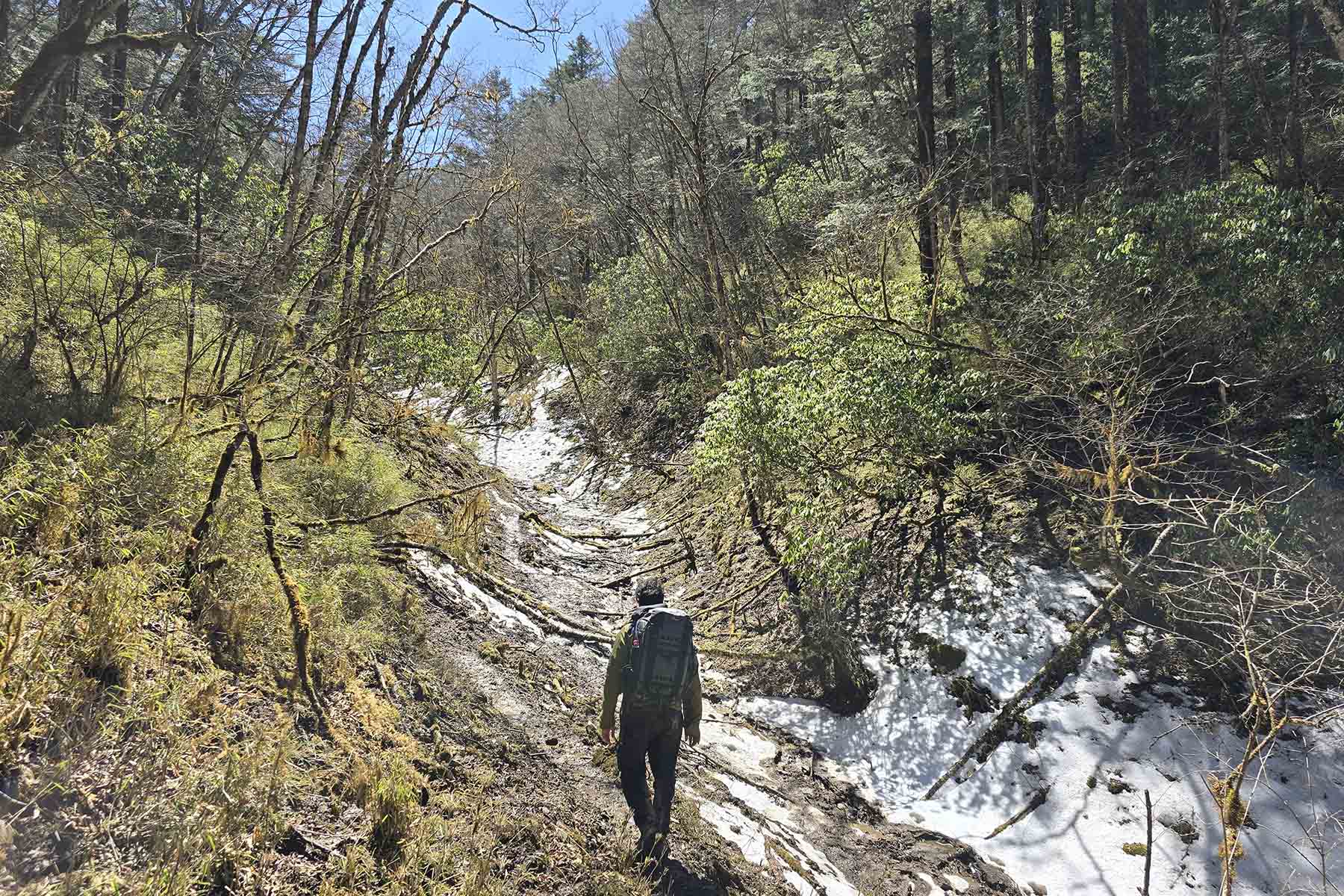
While walking inside the park during raining season there is a chance of encountering snakes or leeches. The walking beyond the roads are on stairs. The stairs to Motianling is long and some sections steep. If you are traveling with senior or juniors please be aware of this.
As a visitor staying inside the hotel inside the park of Tangjiahe, you are not recommended by the hotel people to go out of the hotel by night due to animals. Some animals are more active by night especially the takins that may come down to your hotel backyard by night. But as animal watching visitor to Tangjiahe, most people go out by night to search for the animals and it seems okay.
The old town of Qingxi is very small but worth to spend 20 minutes to have a look while you are there.
The path to Motianling requires 2 hours of walking up on paved stairs to the highest point. The trail up was part of the Yinping Ancient Shu Roads dated back to over 1800 years ago. Motianling was also part of a civil war battle field in 1940s.
There is also a rafting place in Tangjiahe with mild water currents that visitors with children can consider to do in water seasons.
 Tangjiahe Qingxi Old Town
We provide customize tours to Tangjiahe, please send your inquires to us.

Route: Chengdu/ Tangjiahe / Chengdu

Route: Tangjiahe / Pingwu / Yaan / Chengdu

Route: Chengdu - Pingwu/Jiuzhai - Chengdu