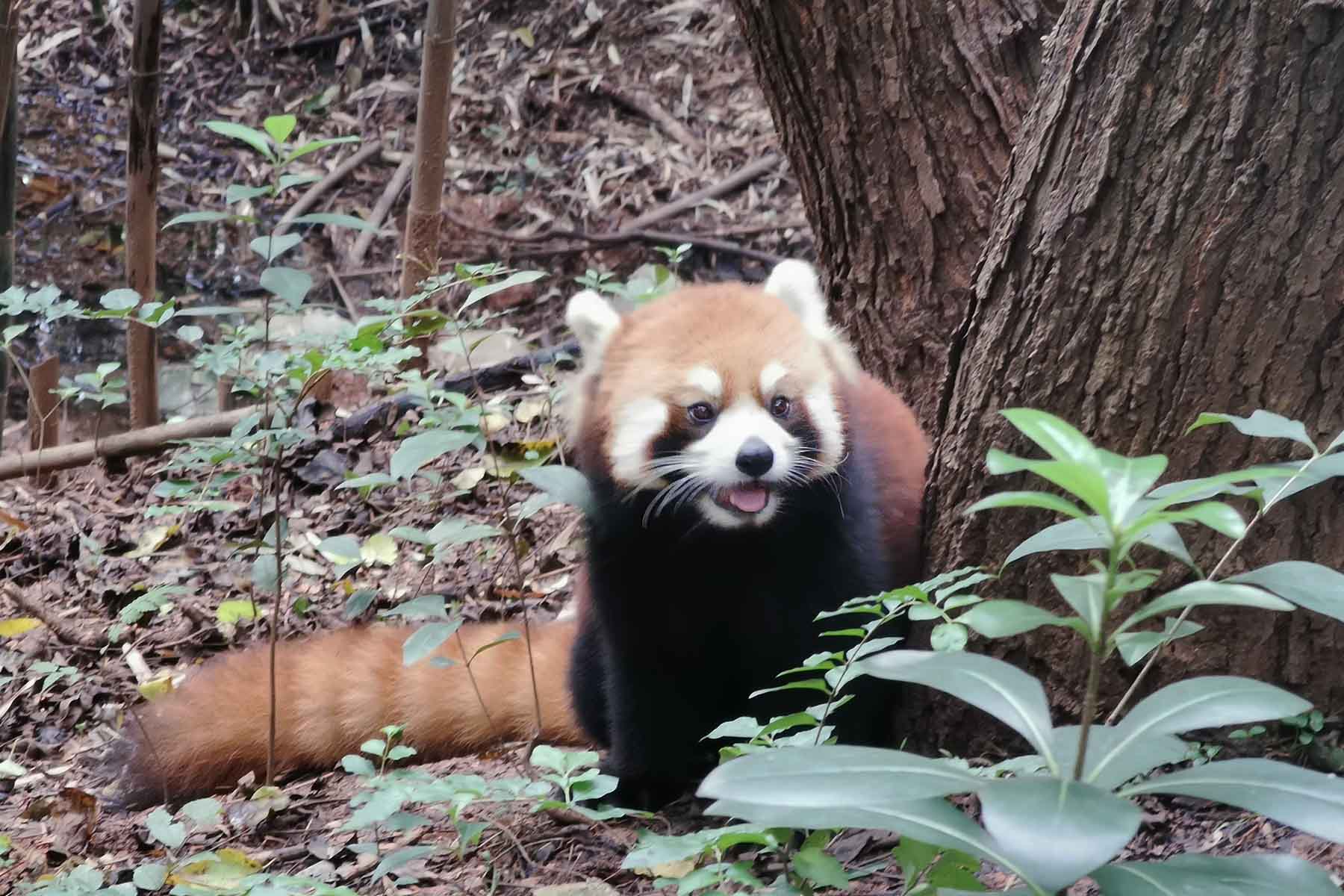
Red pandas are small, tree-dwelling mammals native to the eastern Himalayas and southwestern China. Despite their name, red pandas are not closely related to giant pandas; instead, they belong to their own unique family called Ailuridae. They are known for their distinctive reddish-brown fur, bushy tails, and masked faces, which help them blend into the forest canopy. Red pandas primarily feed on bamboo but also eat fruits, eggs, and insects. They are mostly solitary animals and are active during dawn and dusk. Red pandas are currently classified as endangered due to habitat loss, poaching, and fragmentation of their forest environment. Conservation efforts are crucial to ensure their survival and the preservation of their natural habitat.
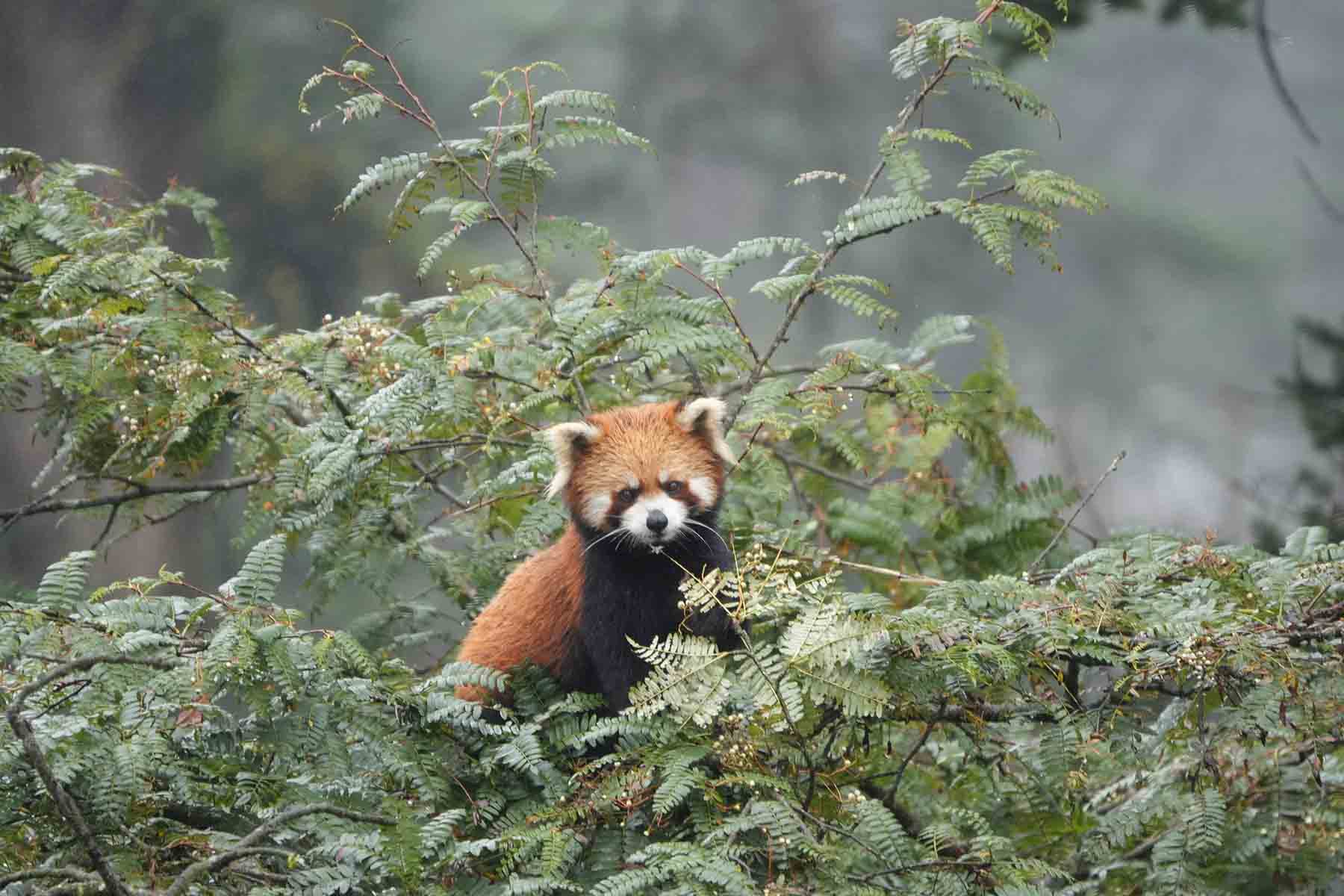
 Red Panda in Labahe
 Red Panda Distribution Map
You may find wild red pandas only in the following countries: China, India, Butan, Nepal and Burma by the Himalayan Mountains and Hengduan Mountains. Within China the habitat is mainly in SW Tibet, Sichuan Province, NW Yunnan Province, among which the western Sichuan area has probably the highest density and population of Red Pandas. Red Pandas usually live at high altitude place between 1500m and 4500m in the Himalayas and the Hengduan Mountains regions. The climate in these places is cool and humid, which is suitable for the survival of red pandas. Red pandas mostly live in mountainous environments with a certain slope and undulation. This provides them with abundant activity space and hiding places, which is conducive to hiding and escaping from natural enemies.Their climate conditions are usually cool and humid and can tolerate high - altitude low temperature. In their habitats, the summer temperature is generally below 25C, and the winter temperature is between -10C - 10C. The annual precipitation is abundant, and the air humidity is high with abundant bamboo which is the main food source of red pandas. There are usually large areas of bamboo groves in their habitat.
The number of red pandas living in the wild is estimated to be around 6000-7000 in total in China, among which around 3500 in Sichuan, around half of the total population. The number has been declining in the last 60 years due to loss of habitat, climate change, poaching but has been rising in the last 15 years.
Sichuan Province (estimated number 3,500+) : Qionglaishan Range, Daxushan Range, Daxiangling and Xiaoxiangling Range, including Wolong Nature Reserve, Labahe and Baoxing Panda Reserve, Mt. Wawu and Longcanggou, Gonggashan Nature Reserve, Liziping Nature Reserve, Tangjiahe Nature Reserve, Wanglang Nature Reserve.
Yunnan Province (estimated number 1800+): Gaolingong Range, Yuling Range, Ailao Range.
Tibet (estimated number 700+): Yarlung Tsangpo Nature Reserve in Tsayu and Motuo. The sub-species of Red Panda live by the west bank of Nujiang River.
 Red Panda in Labahe
Red pandas are usually active and foraging during morning and and dusk while the rest of time resting in tree holes or rock shelters. Red pandas migrate to warmer/sunnier places during winter and will usually have smaller spaces to move around while during summer red pandas move higher and cooler place when food is more abundant. Red pandas feed on bamboo leaves, shoots, tree sprouts, moss, birds and eggs, warms and insects. Like giant pandas, red pandas spend a lot of time searching food and are sometimes seen in the trees in the wild. Red pandas have their mating season during January to March and give birth to babies after around 6 months. Babies stay with mother for around 4 to 6 months.
 Red Panda in Labahe
You may see red pandas either in the wild in Sichuan or in captive near Chengdu.
The best places are Mt. Wawu and Labahe Nature Reserve.
These other places where red pandas are possible include Sichuan Fengtongzhai National Reserve, Tangjiahe National Reserve, Yunnan Gaoligong National Reserve, Wolong National Reserve, Ganluo Maanshan Nature reserve, Longcanggou Forest Park.
We have seen by ourselves wild red pandas multiple times in the following place: Wolong Nature Reserve(in the wild), Labahe Park, Wawu Mountain Park, Longcanggou Forest Park, Gonggashan Reserve.
The following places have also reported spotting of red pandas in recent year: Lixian Bipenggou, Mt. Emei Wanfoding, Xiling Snow Mountain Riyueping, Leshan Muchuan Cizhu, Meigu Dafengding, Lushui Gaoligong, Dali Cangshan, Ebian Heizhugou.
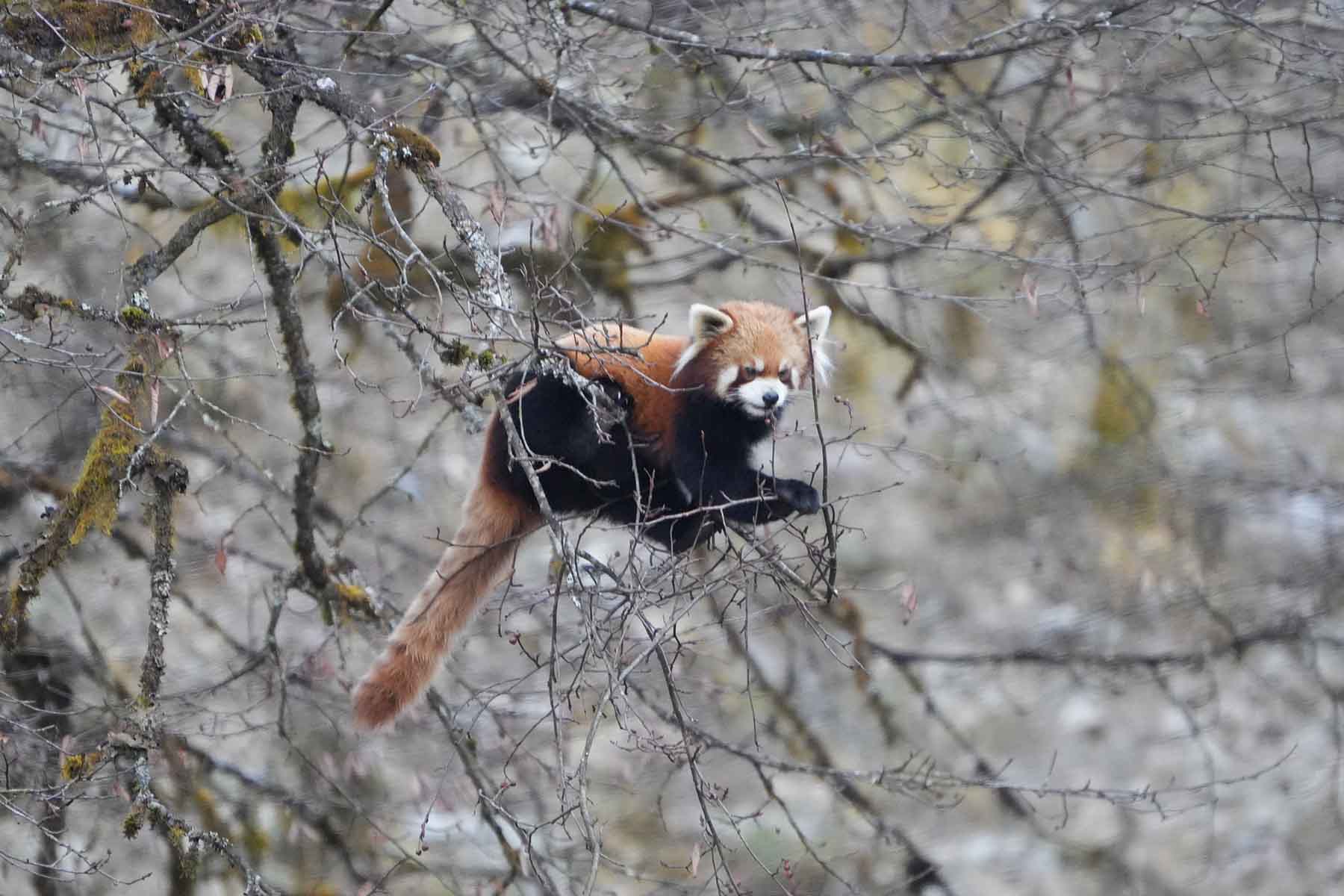
 Red Panda spotted in Minya Konka(Gonggashan) in the Wild
The easily accessible zoos that keep red pandas include Beijing Zoo, Guangzhou Chimelong Park, Chengdu Giant Panda Breeding Center(around 20 red pandas), Dujiangyan Panda Park (around 10 red pandas), Dujiangyan Panda Valley (around 10 red pandas), Dujiangyan Red Panda Forest Park(40 red pandas). All numbers from the year of 2025.
 Red Panda in Dujiangyan Panda Valley
In Wawu Mountain Park the chance is above 90% from August to the next April. In Labahe Nature Reserve the chance is above 80% from August to April. In Tangjiahe and Wanglang Nature Reserve the chance is below 30%. Wolong Nature Reserve the chance is above 50% but will involve hard walking.
The best season to see red pandas in the wild is from late August to November(Berry season). The second best season is in December to February(winter) and in late May to early July(breeding season). Although given the much better living conditions and more protection of habitat, we’ve seen more and more red pandas in the wild in any seasons of a year. March to April is hard because it’s the end of mating season when red pandas tend to hide. July to August is the most leafy season and also higher chance of rain when red pandas will be hiding.
 Red Panda spotted in Wolong Nature Reserve in the Wild
Red Panda is one of the easiest wildlife life to be spotted and photographed in the wild in Sichuan. Red Pandas in Wawu Mountain Park, Labahe Nature Reserve are getting used to humans now and often providing the best chances of photography.
 Red Panda in Labahe
 Red Panda in Labahe
If you have never seen the red pandas, then you may plan your visit to any of the Giant Panda Base of Dujiangyan, Chengdu while visiting giant pandas. And that only takes 1 day's time. If you are keen to see them in the wild and have only limited time, plan Labahe, Mt. Wawu and Longcanggou because these parks are well established and facilitated to allow you to drive in deep in the mountains and with paved trails to walk on and you will have chance to see red pandas from the wild(not in captive). But please plan this in the right seasons at least for 2-3 days to maximize your chance of seeing red pandas in the wild.
You are welcome to send us your inquiries and questions. We provide customized red panda tours along with other wildlife tours.
 Red Panda in Dujiangyan Panda Park