Chengdu
Pandas' Hometown

Jiuzhaigou
Famous Fairyland

Emeishan
Sacred Buddhist Site

Leshan
Giant Buddha

Gonggashan
Best for Hiking

Daocheng Yading
Shangri La Views

Dujiangyan
Irrigation System

Siguniangshan
Eastern Alps

This article is detailed introduction about Sichuan Food, Types of restaurants in Sichuan, How to choose food and restaurants while traveling, how to order food, and etiquette on dining.
Sichuan Food is popular all over China due to its cheap food resource and easy making feature. Sichuan Food refers to the food cooked in Sichuan Province and Chongqing. Please note not everything in Sichuan food is spicy. There are total 3 Styles of Sichuan Cuisine: Upper River, Lower River and Small River.

Kung Pao Chicken

Sichuan Hotpot
To help first-time eater of Sichuan Food(Chinese Food) better understand how to choose food and restaurants while in Sichuan we categorize the restaurants into 2 main types: “Proper Meal” and “Fast Food”.
These are usually hot meals and served in restaurants usually on a banquet table with rice. It is usually shared with multiple people in your group usually more than 1 people. This kind of meal usually takes longer time (1-2h or longer) and usually for lunch or dinner and usually costs more. These restaurants usually include Hot Pot (of various kinds), “Soup Pot” (of various kinds), Chuan Cai (Table Meal) usually Stir-Fries Dishes.
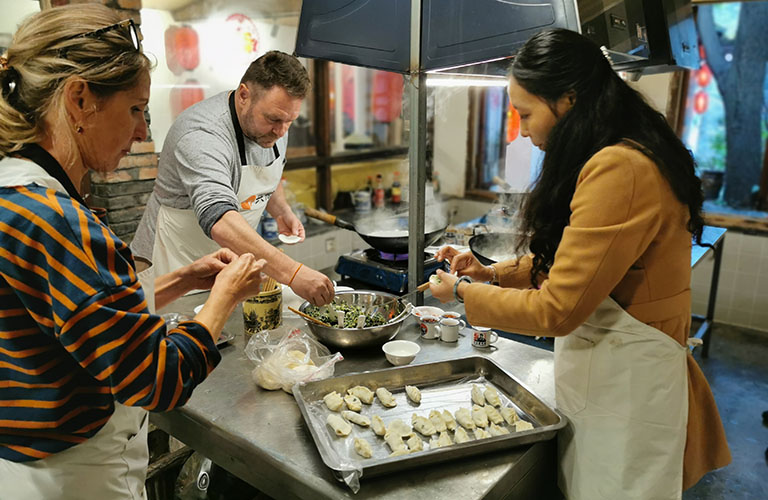
You may call this the fast food of Sichuan (China). These are usually noodles, dumplings and many other types of breads, pancakes, etc. Some of these are also called Xiao Chi that are usually served in smaller restaurants, shops, food vendors in the streets. These food usually cost less and takes less time and good for small groups or individuals.

Sichuan "Snack Food"
Tips:
1, you may not find noodles in a “Proper Meal” place. And you may not find Kung Pao Chicken in a “Fast Food” restaurant.
2, When looking for food, think of your group size, how much time you have for a meal.
3, Some restaurants may have both but not often seen.
We list below the usual type of restaurants in Sichuan you can find by their food types, features, dining etiquette, usual locations as well as suggestions.
These are usually very spicy (and numbing) and oily. Hotpot is a “Proper Meal” that is served usually in bigger restaurant. There are also Frog Hotpot, River Fish Hotpot but most common hotpot is the usual hotpot that you order various of meat and vegetable and cook by yourself. Animal internal organs are largely used such as cow stomach, duck intestines, etc. Cow fat is largely used as the pot base although in Chengdu you may still see some hotpot restaurants using vegetable oil (canola). Hotpot meal involves cooking food in your pot by yourself and make your own “sauce plate”, this will affect largely the taste of food if you don’t do well.
Soup Pot is the same as Hotpot without the spicy things and the food is usually cooked in non-spicy soup sometimes featured with mushroom, or anything you cook such as meat, vegetable. The famous “Yin & Yang” Hotpot (half spicy half non-spicy) is actually half hotpot and half soup pot. Soup Pot (either featured with mushroom or yak meat/intestines) is popular when you travel to Tibetan Places such as Siguniang, Kangding, Yading, etc.
Chuan Chuan is a different version of Hotpot. Food are the same and will also use pot and sauce plate. The difference is Chuan Chuan food is cut nicely and put on a bamboo stick, making the cooking easier, and one doesn’t have to “search” the food from the pot after it’s done. Chuan Chuan restaurants can be small and can be for both individuals or groups. You may get to try even more food in a Chuan Chuan restaurant because everything is charged per Chuan (bamboo stick) other than the bigger portion you order in a Hotpot Restaurant. Chuan Chuan is possibly one of the top 5 most popular food in China.
Mao Cai (Ma La Tang) is what can be called “Individual Hotpot” that is served in small restaurants. In a Mao Cai restaurant food is chosen by eaters but cooked by the restaurant and charged by weight usually separating meat and vegetable. It is suited for solo eaters and it’s usually quicker. The disadvantage is that it usually has only one flavor.
In general hotpot restaurants are very common and easy to find in Sichuan. Some hotpot restaurants features only river fish hotpot or frog hotpot, or intestine hotpot. Please be aware of this when choosing a hotpot restaurant. If you are just one person, try Chuan Chuan because you can choose many different types of food in very small portion.
This is one of the most common Sichuan Food mainly Stir-Fries. Kung Pao Chicken, Mapo Toufu, Double-cooked Pork slices, Fish-flavored eggplant, Fish-flavored pork slices, Spicy soup pork and various stir-fries of vegetable and pork dishes, steamed or stewed dishes, vegetable soup, etc.
Chuan Cai dishes are usually served on a banquet table (sometimes small table) and all dishes are shared by your group. Normally one dish portion is good enough for one person except some fancier restaurant that may serve the dishes in very small portion. These dishes are also cooked at people’s home often. You may see these are the most real and authentic Sichuan Food.
Not all dishes are spicy but you may tell restaurants to put less chilli or pepper corn while cooking especially you may tell restaurant to put less oil in your dish. Steamed rice is served in such restaurant to go along with the vegetable and meat dishes. For many travelers this type of Sichuan dish is the most commonly chosen food because it’s less spicy and more flexible on the flavor and portion. In many tourist destinations out of Chengdu such as Mt. Emei, Leshan, Jiuzhaigou, Kangding, Yading, these restaurants are very common to find.
Noodle shops/restaurants usually serve soup noodle and noodle, dumplings, wonton, fried rice or Gai Jiao rice (rice with vegetable and meat), rice noodle, sour and spicy noodle, sweet dumplings (Tang Yuan), etc. These dishes are usually for 1 person and quick to make. These restaurants are usually small and tables are small and you are expected to leave after finish your meal.
Some people call this type of Sichuan Food the “Fast Food of Sichuan” because they are quick to be served and often cheap. You often see working people choose this type of restaurant because it’s quick and cheap. This is a good choice for when you have limited time or want to save money or if you are a light eater that don’t want to waste much food.
Please note the famous Dan Dan noodle is not served in most of the small noodle shops. For some Sichuan People Dan Dan noodle is not even a top 5 choice of noodle even though it tastes very good already. For travelers we recommend you to go to the chain restaurants named “Zhong Shui Jiao (Zhong’s Dumplings)”, “Long Chao Shou (Long’s Wonton)” or “Lai Tang Yuan (Lai’s Sweet Dumplings)” to try out the various noodles and dumplings in small portion. These restaurants are bigger and nicer and can guarantee cleaner too. Recommended dishes include Tian Shui Mian (Sweet Water Noodle), Zhong Shui Jiao (Zhong’s Dumplings), Dan Dan Noodle, Lai Tang Yuan (Lai’s Sweet Dumplings) and Long Chao Shou (Long’s Wonton) in various flavors.
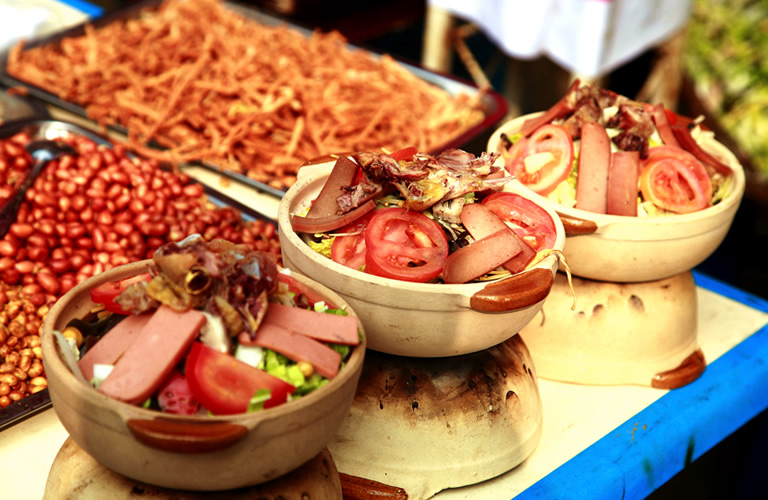
In these chain restaurants you may also try other 20 different types of “snack food” in very small portion including “Ye Er Ba” (Sticky Rice Dumpling wrapped in a leaf), Shai Mai (Steamed Dumpling round-shaped with shredded pork inside) sometimes with different flavors recommend the “Glass Shai Mai”, Bao Zi, Steamed Beef with coated rice powder, Smoked Duck, Husband and Wife Lung Slices (it’s not lung, but cow meat, cow heart, tongue, head skin), Toufu Puding, spicy Bean Jelly noodle, Spicy chicken (cold spicy oil with bones), steamed dumplings, etc. Local Chengdu people call this type of dishes Xiao Chi (Small Food, Snack Food) because the portion served is usually small. Although Snack Food (Xiao Chi) can include more than what’s been listed above, including the food shops or food vendors you see in the street that sell all type of snack food.
Western Food including MacDonalds, KFC (some places also Burger King) are very common in big cities in Sichuan. These are very good choices if you don’t want to spend time looking for local food. Also for very cautious travelers who worry hygiene issues can also choose these western chain restaurants. It’s standard and clean and can be a good change if you traveling in China for a long time. Please note not everywhere you can find these restaurants only in the cities and some popular tourist destinations.
There are also Chinese burger/fried chicken chain store called Dicos, Aosibao, Haucaller (steaks).
Half the size of Sichuan Province (the west part) is Tibetan Area. Though the population of Tibetans in Sichuan is no more than 3 million but their land is vast and is home to many beautiful travel destinations such as Kangding, Siguniang, Daocheng Yading, Bipenggou, Jiuzhaigou, Huanglong, Zoige and Yellow River Bend, Serta Larung Gar, Minya Konka and Tagong, etc.
While traveling in Tibetan areas of Sichuan you may consider to try Tibetan Food even though they are not the dominant food even in Tibetan Areas. Traditionally Tibetan food is not very outstanding until recent years Tibetans have made their food more presentable and tasty. In general Tibetan food in Sichuan is heavy (due to the frequent use of yak, yak butter and barley) and with also a spicy flavor of some dishes.
In Tibetan areas by the usual travel destinations the usual restaurants one will see is Chuan Cai (Table Meal) and Soup Pot. Tibetan Food is not so predominant.
Muslin food is available in the big cities in Sichuan Province. If you are traveling in remote places in Sichuan and want to have muslin food then you’ll have a high chance you won’t be able to find one except if you are traveling by the north bit of Sichuan province in places such as Songpan, Zoige, Aba where there are a small population of muslin people living. In general please don’t expect muslin restaurants easily available when you travel outside of Chengdu. We recommend you to stay in the city of Chengdu if you are strict muslin food eaters.
Being muslin or not, we highly recommend Xinjiang Food (Uighur Food) to any travelers to Chengdu for its tasty lamb dishes, Pilaf (or Pilau), and Kebabs. There are some very good Uighur restaurants in Chengdu you may try to a taste of “Central Asian Style” food. Sichuan Province has the largest Xinjiang people population out of Xinjiang Province and the food quality/taste is good. Xinjiang Food is also heavy.
Street Food in Sichuan is now flourishing and plenty of choices in the city and by the popular tourist places. The hygiene concern is always there for street food but in general the street food is okay and often tasty. Local Sichuan people will avoid some street food by the tourist places mainly because they are over-priced. More and more street food are made nice and tasty now by the tourist places due to harsh competition.
Night market is highly recommended to add to your experience while traveling in Sichuan. The night market culture in and around Chengdu is very strong as we mainly focusing on eating rather than drinking. Below are the night markets we recommend: Fuqin Night Market in Chengdu, Yangliuhe Night Market in Dujiangyan, Zhanggongqiao Food Street in Leshan, Maluqiao food street in Emei.
Choosing Food/Restaurants by/near Tourist Attractions
Most restaurants inside any tourist parks/sites are over-priced. Restaurants nearby the tourist places sometimes aiming to make more money other than making the food tastier because most eaters only dine one time there. It is inevitable that sometimes you’ll run into restaurants that is with higher price and food is average or even not good. In recent years this has been improved a lot though.
This is why we recommend travelers to expect better food & food options in the city of Chengdu because it simply has bigger competition and provides much more options. This does not mean that other places outside of Chengdu don’t have good food.
Dining by Remote Places in Sichuan
The more remote places you go the less options you will have. The harder the road access is the more expensive the food will be. If your tolerance on non-tasty & simple food is low we don’t recommend you to travel to remote places of Sichuan. Although if you are traveling to the “far” but famous places of Sichuan such as Daocheng Yading, Tagong, Litang there are still plenty of options on the restaurants and food because these places are the usual tourist destinations in Sichuan.
Dehydrated mountain food is not available in even the big super markets in Chengdu. If you are looking to prepare food for any mountain expeditions/multi-day treks in Sichuan then you either buy dehydrated food from your home country or stick with the simpler alternatives you can find in Chengdu: cup noodles, instant noodles, dehydrated rice, etc.
Listed below are things and tips to be noticed while ordering food in a restaurant in Sichuan (China). We list out the commonly confusing things and necessary tips for ordering food as a foreign traveler in Sichuan. You are welcome to send us inquiries if you have other doubts and questions of dinning and choosing restaurants and ordering food in Sichuan/China.
A. Know the potion of a dish
Over-ordering often happens when you don’t know the size of a dish and want to try as much as possible. Read above on different types of restaurants and you’ll have basic ideas of how much to order. Another quick way to tell the size/portion of a dish is to check on the other tables of what people ordered.
If you are in a noodle shop (snack food shop) you will often encounter the questions of either “San Liang (150g raw food)” or “Er Liang (100g raw food)” meaning large size portion or medium size portion of noodle (or wonton, or dumplings, or rice noodle) this we recommend you just go for the medium size portion (Er Liang). The other dishes usually served in standard portion.
B, Know the type of your restaurant
Read above of the type of restaurants we listed. There are many other types of food that we can not categorize them into. It is okay to just walk into a restaurant and check their photo menu first if you don’t read the language.
The usual confusing things are the hotpot and different versions of hotpot: make sure you don’t go into any frog hotpot or river fish hotpot restaurants if you don’t like them and mistaken them as usual hotpot restaurants. It will be an excellent experience if you are open to any type of food. Your higher acceptance of food will increase your adventure level of travel if you are open to “exotic and weird” food.
C, Note the price is not always per dish
This mostly only happens by tourist places. Prices of some dishes (usually river fish or chicken) are marked/priced as per Jin (a common Chinese weight unit as 500g) and not per dish/portion. This used to be (and still is) the most common tourist trap in China. But because foreign travelers often don’t read Chinese and don’t understand the weight “Jin” so this is very confusing.
The simplest way to avoid this is to avoid eating river fish or chicken. (river fish dish is often with bones, whole chicken dish is also with bones, you’ll have chicken head and chicken feet in the dish, nothing is wasted).
D, Chicken dishes in Sichuan often has chicken bones
All chicken dishes in traditional Sichuan Cuisine (except Kung Pao Chicken) are cooked with chicken bones. This include spicy chicken, spicy chicken dices, Chicken soup dishes, cold spicy oily chicken, etc. Please don’t order these chicken dishes if you don’t like bones or don’t know how to deal with chicken bones and just stick with Kung Pao Chicken or eat the fried chicken from MacDonald or KFC if you really miss chickens.
E, River fish dish usually has fish bones
River fish dishes are considered a delicacy for many Sichuan people because we leave far from ocean we appreciate the fish we can find in the rivers. If you are keen to try local river fish then it’s often inevitable the fish dish has bones and some are tough. You may ask restaurants to serve fish with less bones.
F, How to avoid Oily Food
Many Sichuan Dishes are very oily. Despite being the least oily food among the 3 styles of Sichuan Food, Upper River Sichuan Food is sometimes still considered oily. The way to avoid this limited because less oil will compromise the taste of food especially for the Snack food and stir-fires. Although most Chuan Cai (table meals) restaurants can make it less oily if you tell them to. Most oil used in the stir-fries are vegetable oil.
It’s not possible to avoid oily food in a hotpot meal unless you order the soup pot.
G, Suggestions for Vegetarians
Vegetarian food is getting popular in China but in Sichuan it’s not so popular. You may find a couple of vegetarian restaurants in Chengdu and outside of Chengdu it’s almost not possible. The solution is to order merely vegetable food in “Table Meal” restaurants or vegetable soup noodle in noodle shops. Trying hot pot as a vegetarian you are recommended to go with Soup Pot other than hotpot.Because most hotpot use cow fat to as the base sauce in the pot. It’s hard to avoid meat in many Snack Food such as dumpling, wonton.
If you are strict vegetarian, please be aware of some dishes may appear to be vegetable but sometimes with minced pork such as Mapo Toufu. Some dishes are cooked with pig fat even though they are vegetable dishes.
H, Non-spicy Food Choices
Most Sichuan Food are on the spicy side but some are not. The following are the usual non-spicy Sichuan food: Kung Pao Chicken, Fish-flavored dishes, Tomato with eggs, toufu and vegetable soup, steamed dishes such as Xian Shao Bai and Tian Shao Bai, Steamed Meat dishes, Hua Rou and many other stir-fries. Remember most restaurants when you order food you may tell restaurants to make it less spicy or even least/non-spicy for you.
For hotpot go for the non-spicy soup pot. For Snack Food go for the soup noodle without “Red Soup”.
I, Looking for Restaurants: Do not always searching on the Ground Level
It’s easy to just look at the ground level for restaurants but many local good restaurants that locals go to are inside big shopping malls and modern shopping centers by 4-6 floor or underground by -1 or -2 floor. For example in Chunxi Road by the panda building, some good restaurants are underground or on the 2-5th floor inside the big buildings.
We local people not only go to find restaurants on the ground floor where it’s easy to see and find and walk to but we also go to the shopping centers by higher floors (usually 4-6 floor) and there are plenty of good restaurants of many styles and types available. It is also fun for travelers to look at the modern side of Chengdu and other cities in Sichuan by checking the modern shops in the shopping centers and look at the local people there.
J, Useful Food Apps
Popular food apps in China include Dazhong Dianping, Meituan which are extremely helpful. Have these installed on your phone and find a way to translate and learn how to use it’s basic features. Most restaurants have their food menu with photos. If you are a foodie then it’s worth the time to learn how to use these two apps. Some apps in China are making English versions including Amap that is featuring the shops and sites on English version map.
K, Ordering via QR Code on the Table
Most restaurants are now taking orders from your phone by scanning the QR code on your table using your alipay or wechat. This method provides you to see the photo of food but may not work for some mini-apps if you don’t own a domestic sim card. You can always request for ordering via a waiter but in busy restaurants this may involve waiting and some restaurants people may be impatient.
L, Paying and Tipping
Tipping is not a common practice in Chinese restaurants except some 5-start hotel restaurants. All restaurants expect to be paid digitally over phone scanning or being scanned. Cash is still accepted but not popular and some shops may not have cash changes for you. Note some busy restaurants don’t expect you to sit long time by table after you finish your meal because these busy restaurants expect to take new customers especially by weekends and busy places.
M, Drinks and Drinking
Most restaurants sell wine in bottles and only few will serve wine in cups. The usual strong spirit is called Bai Jiu in China. Bai Jiu is very strong and normally we recommend you to be careful on drinking Bai Jiu.
Drinking in public is not proper but allowed. If you have a bottle of beer in a park in Chengdu it is okay and not against any laws but you may be either viewed as a foreign alcoholic or a foreigner who loves drinking very much. In China the overall (alcohol) drinking culture is not very strong.
We welcome any kind of questions regarding Sichuan Food from anyone who's reading this. We aim to make this article useful for first-time eaters of local Sichuan Food.